Sunday, May 10, 2020

TOP ANDROID HACKING TOOLS OF 2018

An Android remote administration tool (RAT) is a programmed tool that allows a remote device to control a smartphone as if they have physical access to that system. While screen sharing and remote administration have many legal uses, "RAT" software is usually associated with the unauthorized or malicious activity. I have streamlined here top android hacking tools of 2018.

TOP ANDROID HACKING TOOLS OF 2018

Here are the most advanced in functionality top android hacking tools of 2018.

1. DROIDJACK

DroidJack gives you the power to establish control over your beloveds' Android devices with an easy to use GUI and all the features you need to monitor them. It has many advanced features that you can perform over the remote smartphone. DroidJack is one of the top lists as it also has the functionality to read/write WhatsApp messages.

You can also follow a step by step tutorial on how to hack smartphone remotely using droidjack.

2. OMNIRAT

OmniRAT is the super powerful multi-OS remote administration tool that can a smartphone either using a smartphone or using a Windows or Mac PC. It has a huge list of features that make it very powerful. It can make calls through that smartphone remotely. It's completely fully undetectable.

3. ANDRORAT

AndroRat is a client/server application developed in Java Android for the client side and in Java/Swing for the Server. The name AndroRat is a mix of Android and RAT (Remote Access Tool). It was developed as a project by the university students, which works great for hacking into Android devices.

You can also follow a step by step tutorial on how to hacking a smartphone remotely using androrat.

4. SPYNOTE

SpyNote is a lightweight Android remote administration tool (RAT) to hack into a smartphone device remotely. It gives you the power to establish control over Android devices with an easy to use GUI and all the features you need to monitor them. Build a custom APK or bind the payload to an already existing APK such as a game or social media app.

You can also follow a step by step tutorial on how to hack any android phone remotely with spynote.

5. AHMYTH

AhMyth is a powerful android remote administrator tool that gives you the power to establish control over your beloveds' android devices with an easy to use GUI and all the features you need to monitor them.

These are all the top android hacking tools of 2018. There are also many other rats but these are the most advanced in tech and features. There may appear few more that can compete these and make a place to be in the top android list.
Related posts

Top 20 Android Spy Apps That Will.Make U Fell Like A Dectitive

             Top 10 Best android spy apps.                 

t's worth to note that there are plenty of Android spy apps available on the Google Play Store, but mentioning all of them is not possible. So, in this article, we have listed the one that's popular and used by many. So, let's explore the list of best spy apps 2019.

#1 Spy Camera OS

Spy Camera OS

This app permits users to capture images secretly. This app provides a smart way to shoot photos with a hidden camera interface so people wouldn't notice that you are taking pictures of them. Also, every sound and flash etc get disabled in this app.

#2 Ear Spy

Ear Spy

This is an awesome app to record even low voices. By this app, you can place your phone in the other room and can listen to the voices of that room by your Bluetooth handset. This app actually records the sound and then amplifies its recording and give you the amplified clear voices.

#3 Ip Cam Viewer

Ip Cam Viewer

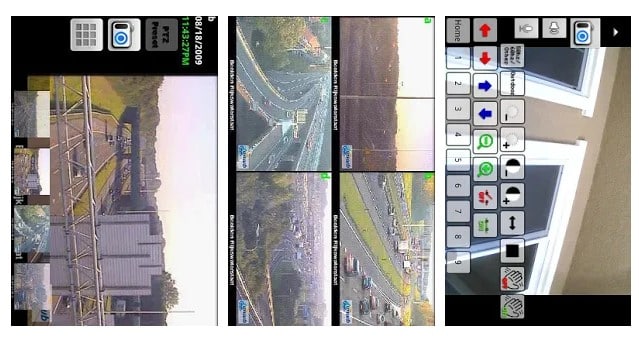
This awesome app allows to remotely view and control your IP Camera, DVR, Network Video Recorder, traffic cameras, CCTV or WebCam from an android device. In its new version, you can also get the notification on detecting motion on the device. This app can automatically start recording whenever it detects motion.

#4 Automatic Call Recorder

Automatic Call Recorder

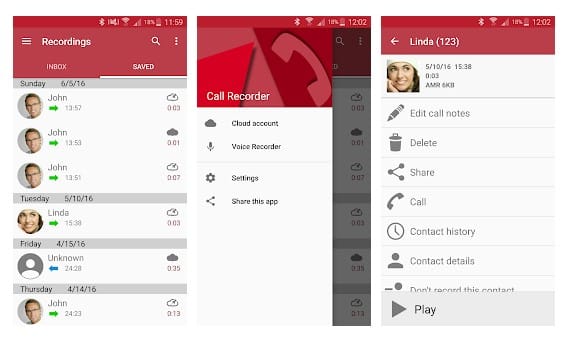
This is another best Spy App that one can have on their Android smartphone. This app gets automatically launched whenever you make or receive any call. It records all the conversation b/w speakers and also the surrounding noise of the device in which it is installed.

#5 Monitor Call Sms Location

Monitor Call Sms Location

This is another good spy app to remotely monitor SMS, Photo, Location, call logs and many more things on an Android device. This will exact location of the targeted device through a web-portal even if GPS disabled on the target device. The app comes with the three-day free trial option.

#6 Anti Spy Mobile

Anti Spy Mobile

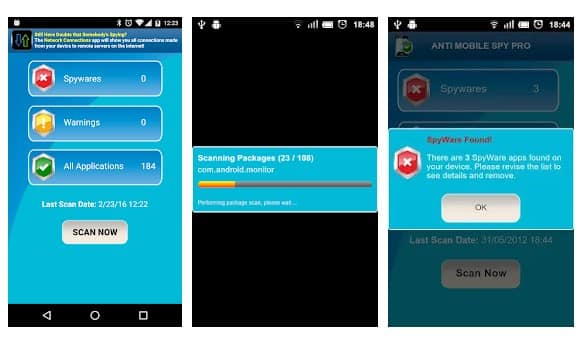
You don't know whether you had installed any spyware software on your phone? Use this app to instantly find the spyware. The Android app uses advanced detection techniques to detect new spyware. So, with this app, you can easily protect yourself from Android spyware.

#7 Hidden Eye

Hidden Eye

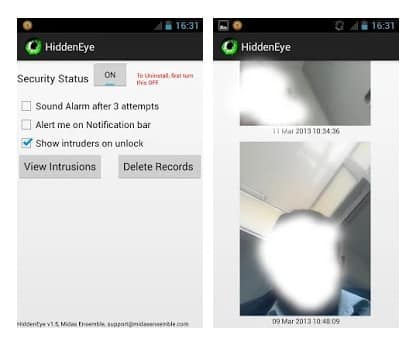
Ever wanted to know who tried snooping on your phone while you were away. Your friends or family member might have tried to unlock your phone. Hidden Eye is a simple app with no frills that will photograph the person when they try to unlock your phone.

#8 AppLock

AppLock

Applock is the most downloaded app lock in Play Store. Protect privacy with password, pattern, fingerprint lock. AppLock can lock Facebook, Whatsapp, Gallery, Messenger, SMS, Contacts, Gmail, Settings, incoming calls and any app you choose. Prevent unauthorized access and guard privacy. Ensure security.

#9 Hide Calls Automatically

Hide Calls Automatically

With this app, all outgoing, incoming and missed calls coming from private contacts will be deleted automatically from calls Log of your phone! No icon of this app will appear in your list of applications on your phone.

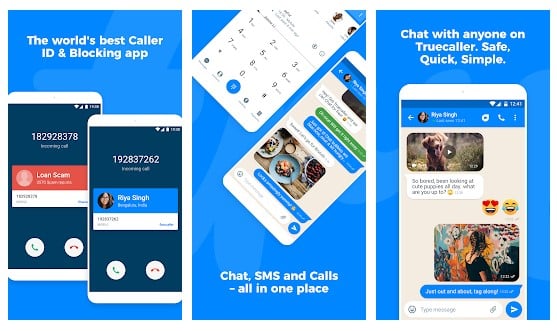
#10 Truecaller: Caller ID & Dialer

Truecaller

Truecaller is the only dialer you'll ever need with the ability to identify unknown callers and block unwanted calls. See names and photos of people who call, even if they aren't saved in your phonebook. And know when friends are free to talk, making your calling experience smarter and more delightful.

#11 Cell Tracker

Cell Tracker

You can use the cell tracker Android app to keep track of the location of your smartphone. With the help of this app, you can track all the locations you have visited in the last few days with your Android phone. To check the locations visited you have to launch the app and click on "View Now". No need to turn on the GPS.

#12 Secret Calls

Secret Calls

With the help of this app, all outgoing, Incoming and Missed Calls coming from private contacts will be deleted automatically from Calls Log of your phone! No icon of this app will appear in your list of applications on your phone.

#13 Spy Camera

Spy Camera

This is another Spy app on the list which provides one-touch to capture image feature. The app actually has lots of useful features. With the help of this app, you can find your lost phone because this app allows you to set up a number. When you lost your phone, just SMS to this phone and it will take a picture and upload to drive.

#14 Truecaller

Truecaller

Truecaller is a popular Android app which is used every day to identify unknown calls, block spam calls and spam SMS. It filters out the unwanted and lets you connect with people who matter.

#15 Whoscall – Caller ID

Whoscall - Caller ID

Whoscall, the best caller ID App that identifies unknown calls and blocks annoying spams, robocall & telemarketing with more than 50 million downloads and over 1 billion numbers data. It also got the call blocker that can be used to blacklist or whitelist contacts stored on your smartphone.

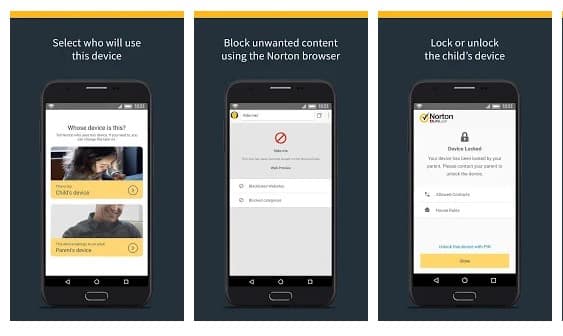
#16 Norton Family parental control

Norton Family parental control

Norton Family parental control is basically an Android app that is meant to keep kids safe online. However, this is nothing sort of a spy app. The app can help you to supervise online activity. You can easily keep track of sites which your friend visit and what they search if you install Norton Family Parental control on their phone.

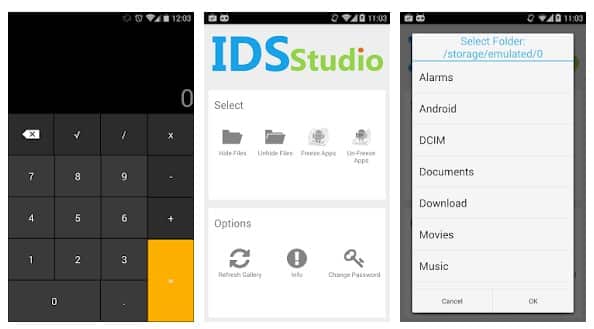
#17 Smart Hide Calculator

Smart Hide Calculator

The app doesn't help users to spy on others. But, it can give you a detective type feeling. Smart hide calculator is a fully functional calculator app but with a little twist. Once you enter the password and press the '=' button then boom you are presented to an interface where you can hide, unhide pictures, videos, documents or files with any file extension.

#18 Hidden Eye

Hidden Eye

Ever wanted to know who tried snooping into your phone while you were away. Your friends or family member might have tried to unlock your phone. Hidden Eye is a simple app with no frills that will photograph the person when they try to unlock your phone.

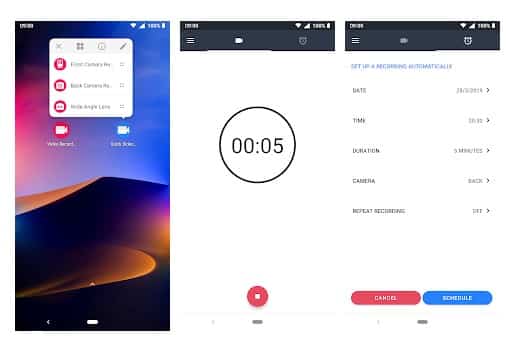
#19 Background Video Recorder

Background Video Recorder

This is another best Android spy app that helps users to record what's happening behind them. Background Video Recorder is basically a camera app that records videos silently on the background. The app eliminates the camera shutter sounds, camera previews and it can also record videos when the screen is off.

#20 Kids Place

Kids Place

Kids Place is another best parental control app in the list and its meant to protect your kids' online activities. However, if you don't have kids, you can use the app to track other devices. The app gives you full control over other devices and you can control everything including calls, text, internet browsing, apps, etc.

@EVERYTHING NT

Related links

Why Receipt Notifications Increase Security In Signal

This blog post is aimed to express and explain my surprise about Signal being more secure than I thought (due to receipt acknowledgments). I hope you find it interesting, too.

Signal, and especially its state update protocol, the Double Ratchet algorithm, are widely known for significantly increasing security for instant messaging. While most users first see the end-to-end security induced by employing Signal in messaging apps, the properties achieved due to ratcheting go far beyond protecting communication against (active) attackers on the wire. Due to updating the local device secrets via the Double Ratchet algorithm, the protocol ensures that attackers, who temporarily obtain a device's local storage (on which Signal runs), only compromise confidentiality of parts of the communications with this device. Thus, the leakage of local secrets from a device only affects security of a short frame of communication. The exact duration of compromise depends on the messaging pattern among the communicating parties (i.e., who sends and receives when), as the state update is conducted during the sending and receiving of payload messages.


The Double Ratchet

The Double Ratchet algorithm consists of two different update mechanisms: the symmetric ratchet and the asymmetric ratchet. The former updates symmetric key material by hashing and then overwriting it with the hash output (i.e.,  k:=H(k)). Thus, an attacker, obtaining key material can only predict future versions of the state but, due to the one-wayness of the hash function, cannot recover past states. The asymmetric ratchet consists of Diffie-Hellman key exchanges (DHKE). If, during the communication, party A receives a new DH share gb as part of a message from the communication partner B, then A samples a new DH exponent a and responds with the respective DH share ga in the next sent message. On receipt of this DH share, B will again sample a new DH exponent b' and attach the DH share gb' to the next message to A. With every new DH share, a new DHKE gab is computed among A and B and mixed into the key material (i.e., k:=H(k,gab)). For clarity, I leave out a lot of details and accuracy. As new DH shares ga and gb are generated from randomly sampled DH exponents a and b, and the computation of gab is hard if neither a nor b are known, the key material recovers from an exposure of the local secrets to an attacker after a new value gab was freshly established and mixed into it. Summing up this mechanism, if an attacker obtains the local state of a Signal client, then this attacker cannot recover any previously received message (if the message itself was not contained in the local state), nor can it read messages that are sent after a new gab was established and mixed into the state. The latter case happens with every full round-trip among A and B (i.e., A receives from B, A sends to B, and A receives again from B).
Conceptual depiction of Double Ratchet in Signal two years ago (acknowledgments were only protected between client and server). The asymmetric ratchet fully updates the local secrets after one round-trip of payload messages.

Research on Ratcheting

During the last two years, the Signal protocol inspired the academic research community: First, a formal security proof of Signal was conducted [1] and then ratcheting was formalized as a generic primitive (independent of Signal) [2,3,4]. This formalization includes security definitions that are derived via 1. defining an attacker, 2. requiring security unless it is obvious that security cannot be reached. Protocols, meeting this optimal notion of security, were less performant than the Double Ratchet algorithm [3,4]. However, it became evident that the Double Ratchet algorithm is not as secure as it could be (e.g., recovery from exposure could be achieved quicker than after a full round-trip; see, e.g., Appendix G of our paper [3]). Afterwards, protocols (for slightly weakened security notions) were proposed that are similarly performant as Signal but also a bit more secure [5,6,7].

Protecting Acknowledgments ...

In our analysis of instant messaging group chats [8] two years ago (blog posts: [9,10]), we found out that none of the group chat protocols (Signal, WhatsApp, Threema) actually achieves real recovery from an exposure (thus the asymmetric ratchet is not really effective in groups; a good motivation for the MLS project) and that receipt acknowledgments were not integrity protected in Signal nor WhatsApp. The latter issue allowed an attacker to drop payload messages in transmission and forge receipt acknowledgments to the sender such that the sender falsely thinks the message was received. Signal quickly reacted on our report by treating acknowledgments as normal payload messages: they are now authenticated(-encrypted) using the Double Ratchet algorithm.

... Supports Asymmetric Ratchet

Two years after our analysis, I recently looked into the Signal code again. For a training on ratcheting I wanted to create an exercise for which the lines in the code should be found that execute the symmetric and the asymmetric ratchet respectively. Somehow I observed that the pure symmetric ratchet (only updates via hash functions) was nearly never executed (especially not when I expected it) when lively debugging the app but almost always new DH shares were sent or received. I realized that, due to encrypting the receipt acknowledgments now, the app always conducts full round-trips with every payload message. In order to observe the symmetric ratchet, I needed to temporarily turn on the flight mode on my phone such that acknowledgments are not immediately returned.
Conceptual depiction of Double Ratchet in Signal now (acknowledgments encrypted). The asymmetric ratchet fully updates the local secrets after an acknowledgment for a message is received.

Consequently, Signal conducts a full DHKE on every sent payload message (in case the receiving device is not offline) and mixes the result into the state. However, a new DH exponent is always already sampled on the previous receipt (see sketch of protocol above). Thus, the exponent for computing a DHKE maybe remained in the local device state for a while. In order to fully update the state's key material, two round-trips must be initiated by sending two payload messages and receiving the resulting two acknowledgments. Please note that not only the mandatory receipt acknowledgments are encrypted but also notifications on typing and reading a message.

If you didn't understand exactly what that means, here a tl;dr: If an attacker obtains your local device state, then with Signal all previous messages stay secure and (if the attacker does not immediately use these secrets to actively manipulate future conversations) all future messages are secure after you wrote two messages (and received receipt acknowledgments) in all of your conversations. Even though this is very (in practice certainly sufficiently) secure, recent protocols provide stronger security (as mentioned above) and it remains an interesting research goal to increase their performance.

[1] https://eprint.iacr.org/2016/1013.pdf
[2] https://eprint.iacr.org/2016/1028.pdf
[3] https://eprint.iacr.org/2018/296.pdf
[4] https://eprint.iacr.org/2018/553.pdf
[5] https://eprint.iacr.org/2018/889.pdf
[6] https://eprint.iacr.org/2018/954.pdf
[7] https://eprint.iacr.org/2018/1037.pdf
[8] https://eprint.iacr.org/2017/713.pdf
[9] https://web-in-security.blogspot.com/2017/07/insecurities-of-whatsapps-signals-and.html
[10] https://web-in-security.blogspot.com/2018/01/group-instant-messaging-why-baming.html
Related articles

Saturday, May 9, 2020

How Do I Get Started With Bug Bounty ?

How do I get started with bug bounty hunting? How do I improve my skills?


These are some simple steps that every bug bounty hunter can use to get started and improve their skills:

Learn to make it; then break it!
A major chunk of the hacker's mindset consists of wanting to learn more. In order to really exploit issues and discover further potential vulnerabilities, hackers are encouraged to learn to build what they are targeting. By doing this, there is a greater likelihood that hacker will understand the component being targeted and where most issues appear. For example, when people ask me how to take over a sub-domain, I make sure they understand the Domain Name System (DNS) first and let them set up their own website to play around attempting to "claim" that domain.

Read books. Lots of books.
One way to get better is by reading fellow hunters' and hackers' write-ups. Follow /r/netsec and Twitter for fantastic write-ups ranging from a variety of security-related topics that will not only motivate you but help you improve. For a list of good books to read, please refer to "What books should I read?".

Join discussions and ask questions.
As you may be aware, the information security community is full of interesting discussions ranging from breaches to surveillance, and further. The bug bounty community consists of hunters, security analysts, and platform staff helping one and another get better at what they do. There are two very popular bug bounty forums: Bug Bounty Forum and Bug Bounty World.

Participate in open source projects; learn to code.
Go to https://github.com/explore or https://gitlab.com/explore/projects and pick a project to contribute to. By doing so you will improve your general coding and communication skills. On top of that, read https://learnpythonthehardway.org/ and https://linuxjourney.com/.

Help others. If you can teach it, you have mastered it.
Once you discover something new and believe others would benefit from learning about your discovery, publish a write-up about it. Not only will you help others, you will learn to really master the topic because you can actually explain it properly.

Smile when you get feedback and use it to your advantage.
The bug bounty community is full of people wanting to help others so do not be surprised if someone gives you some constructive feedback about your work. Learn from your mistakes and in doing so use it to your advantage. I have a little physical notebook where I keep track of the little things that I learnt during the day and the feedback that people gave me.


Learn to approach a target.
The first step when approaching a target is always going to be reconnaissance — preliminary gathering of information about the target. If the target is a web application, start by browsing around like a normal user and get to know the website's purpose. Then you can start enumerating endpoints such as sub-domains, ports and web paths.

A woodsman was once asked, "What would you do if you had just five minutes to chop down a tree?" He answered, "I would spend the first two and a half minutes sharpening my axe."
As you progress, you will start to notice patterns and find yourself refining your hunting methodology. You will probably also start automating a lot of the repetitive tasks.

Related word


Reversing Rust String And Str Datatypes

Lets build an app that uses several data-types in order to see how is stored from a low level perspective.

Rust string data-types

The two first main objects are "str" and String, lets check also the constructors.


Imports and functions

Even such a basic program links several libraries and occupy 2,568Kb,  it's really not using the imports and expots the runtime functions even the main. 


Even a simple string operation needs 544 functions on rust:


Main function

If you expected see a clear main function I regret to say that rust doesn't seem a real low-level language In spite of having a full control of the memory.


Ghidra turns crazy when tries to do the recursive parsing of the rust code, and finally we have the libc _start function, the endless loop after main is the way Ghidra decompiles the HLT instruction.


If we jump to main, we see a function call, the first parameter is rust_main as I named it below:


If we search "hello world" on the Defined Strings sections, matches at the end of a large string


After doing "clear code bytes" we can see the string and the reference:


We can see that the literal is stored in an non null terminated string, or most likely an array of bytes. we have a bunch of byte arrays and pointed from the code to the beginning.
Let's follow the ref.  [ctrl]+[shift]+[f] and we got the references that points to the rust main function.


After several naming thanks to the Ghidra comments that identify the rust runtime functions, the rust main looks more understandable.
See below the ref to "hello world" that is passed to the string allocated hard-coding the size, because is non-null terminated string and there is no way to size this, this also helps to the rust performance, and avoid the c/c++ problems when you forgot the write the null byte for example miscalculating the size on a memcpy.


Regarding the string object, the allocator internals will reveal the structure in static.
alloc_string function call a function that calls a function that calls a function and so on, so this is the stack (also on static using the Ghidra code comments)

1. _$LT$alloc..string..String$u20$as$u20$core..convert..From$LT$$RF$str$GT$$GT$::from::h752d6ce1f15e4125
2. alloc::str::_$LT$impl$u20$alloc..borrow..ToOwned$u20$for$u20$str$GT$::to_owned::h649c495e0f441934
3. alloc::slice::_$LT$impl$u20$alloc..borrow..ToOwned$u20$for$u20$$u5b$T$u5d$$GT$::to_owned::h1eac45d28
4. alloc::slice::_$LT$impl$u20$$u5b$T$u5d$$GT$::to_vec::h25257986b8057640
5. alloc::slice::hack::to_vec::h37a40daa915357ad
6. core::slice::_$LT$impl$u20$$u5b$T$u5d$$GT$::len::h2af5e6c76291f524
7. alloc::vec::Vec$LT$T$GT$::extend_from_slice::h190290413e8e57a2
8. _$LT$alloc..vec..Vec$LT$T$GT$$u20$as$u20$alloc..vec..SpecExtend$LT$$RF$T$C$core..slice..Iter$LT$T$GT$$GT$$GT$::spec_extend::h451c2f92a49f9caa
...


Well I'm not gonna talk about the performance impact on stack but really to program well reusing code grants the maintainability and its good, and I'm sure that the rust developed had measured that and don't compensate to hardcode directly every constructor.

At this point we have two options, check the rust source code, or try to figure out the string object in dynamic with gdb.

Source code

Let's explain this group of substructures having rust source code in the hand.
The string object is defined at string.rs and it's simply an u8 type vector.


And the definition of vector can be found at vec.rs  and is composed by a raw vector an the len which is the usize datatype.


The RawVector is a struct that helds the pointer to the null terminated string stored on an Unique object, and also contains the allocation pointer, here raw_vec.rs definition.


The cap field is the capacity of the allocation and a is the allocator:


Finally the Unique object structure contains a pointer to the null terminated string, and also a one byte marker core::marker::PhantomData


Dynamic analysis

The first parameter of the constructor is the interesting one, and in x64 arch is on RDI register, the extrange sequence RDI,RSI,RDX,RCX it sounds like ACDC with a bit of imagination (di-si-d-c)

So the RDI parámeter is the pointer to the string object:


So RDI contains the stack address pointer that points the the heap address 0x5578f030.
Remember to disable ASLR to correlate the addresses with Ghidra, there is also a plugin to do the synchronization.

Having symbols we can do:
p mystring

and we get the following structure:

String::String {
  vec: alloc::vec::Vec {
    buf: alloc::raw_vec::RawVec {
      ptr: core::ptr::unique::Unique {
        pointer: 0x555555790130 "hello world\000",
        _marker: core::marker::PhantomData
     },
     cap: 11,
     a: alloc::alloc::Global
   },
   len: 11
  }
}

If the binary was compiled with symbols we can walk the substructures in this way:

(gdb) p mystring.vec.buf.ptr
$6 = core::ptr::unique::Unique {pointer: 0x555555790130 "hello world\000", _marker: core::marker::PhantomData}

(gdb) p mystring.vec.len

$8 = 11

If we try to get the pointer of each substructure we would find out that the the pointer is the same:


If we look at this pointer, we have two dwords that are the pointer to the null terminated string, and also 0xb which is the size, this structure is a vector.


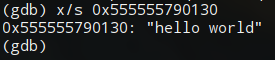
The pionter to the c string is 0x555555790130


This seems the c++ string but, let's look a bit deeper:

RawVector
  Vector:
  (gdb) x/wx 0x7fffffffdf50
  0x7fffffffdf50: 0x55790130  -> low dword c string pointer
  0x7fffffffdf54: 0x00005555  -> hight dword c string pointer
  0x7fffffffdf58: 0x0000000b  -> len

0x7fffffffdf5c: 0x00000000
0x7fffffffdf60: 0x0000000b  -> low cap (capacity)
0x7fffffffdf64: 0x00000000  -> hight cap
0x7fffffffdf68: 0xf722fe27  -> low a  (allocator)
0x7fffffffdf6c: 0x00007fff  -> hight a
0x7fffffffdf70: 0x00000005 

So in this case the whole object is in stack except the null-terminated string.


More articles

"I Am Lady" Linux.Lady Trojan Samples


Bitcoin mining malware for Linux servers - samples
Research: Dr. Web. Linux.Lady

Sample Credit:  Tim Strazzere

MD5 list:

0DE8BCA756744F7F2BDB732E3267C3F4
55952F4F41A184503C467141B6171BA7
86AC68E5B09D1C4B157193BB6CB34007
E2CACA9626ED93C3D137FDF494FDAE7C
E9423E072AD5A31A80A31FC1F525D614


Download. Email me if you need the password.

More articles


  1. Rom Hacking Pokemon
  2. Hacking Wifi
  3. Linux Hacking
  4. Hacking Desde Cero
  5. Hacking Course
  6. Significado De Hacker
  7. Curso De Hacking Etico Gratis
  8. Pagina Hacker
  9. Curso Ethical Hacking
  10. Hacking Google Home Mini
  11. Ethical Hacking

WordPress 5.0.0 Crop-Image Shell Upload Exploit

Related word


  1. Como Empezar A Hackear
  2. Growth Hacking
  3. Hacking Gif
  4. Growth Hacking Sean Ellis
  5. El Libro Del Hacker
  6. Growth Hacking Instagram
  7. Master Growth Hacking